What to Pack for Wildcat Off-Road Park: The UTV Rider Checklist

You’re leaving for Wildcat Off-Road Park tomorrow.
The machine is on the trailer.
Cooler is packed.
Everybody is excited.
Then, halfway to East Bernstadt, Kentucky, somebody asks:
“Did anyone bring the tire plug kit?”
Silence.
A good Wildcat packing list isn’t about bringing everything you own.
It’s about bringing the things that can keep a small problem from becoming the reason your riding day ends early.
This guide is designed to be a practical UTV packing checklist for Wildcat Off-Road Park—covering the machine, riding gear, recovery equipment, tools, food, clothing and the things you’ll want back at basecamp.
Use what applies to your machine and your group.
Leave behind what doesn’t.
The Quick Wildcat UTV Packing Checklist
If you’re looking at this while loading the trailer, start here.
Machine & Trail Essentials
☐ Helmet and appropriate safety gear
☐ Eye protection
☐ Current Wildcat trail map/navigation
☐ Phone
☐ Two-way radios if your group uses them
☐ Drinking water
☐ Snacks
☐ First-aid kit
☐ Flashlight/headlamp
☐ Rain gear
☐ Gloves
☐ Sunscreen
☐ Insect repellent
Recovery Equipment
☐ Winch in working condition
☐ Tow/recovery strap
☐ Soft shackles or appropriate recovery connectors
☐ Tree saver if appropriate
☐ Winch controller/remote
☐ Gloves for recovery work
☐ Tire plug kit
☐ Tire inflator/compressor
☐ Tire pressure gauge
Tools & Machine Supplies
☐ Machine-specific tool kit
☐ Correct sockets/wrenches for common repairs
☐ Pliers
☐ Screwdrivers
☐ Adjustable wrench
☐ Zip ties
☐ Electrical tape
☐ Duct tape
☐ Spare fuses
☐ Spare machine-specific parts as appropriate
☐ Appropriate fluids if needed
Personal Gear
☐ Riding clothes
☐ Extra socks
☐ Extra shirt
☐ Dry shoes
☐ Change of clothes
☐ Jacket/layers
☐ Rain protection
☐ Toiletries
☐ Medications/personal essentials
Basecamp
☐ Food
☐ Drinks
☐ Coffee
☐ Phone chargers
☐ Cooler
☐ Dirty-clothes bag
☐ Wet-gear plan
☐ Evening clothes
☐ Anything your lodging doesn’t provide
That’s the quick version.
Now let’s make sure you understand why some of these things matter and which items deserve priority.
1. Start With the Machine, Not the Suitcase
The most important preparation happens before you pack anything.
Inspect your UTV or SxS.
A tool kit doesn’t compensate for knowingly bringing a machine that needs maintenance.
Several days before the trip, check:
☐ Tire condition
☐ Tire pressure
☐ Fluid levels
☐ Brakes
☐ Steering
☐ Suspension
☐ Wheel/lug condition
☐ Battery
☐ Lights
☐ Winch
☐ Belt where applicable
☐ Visible leaks
☐ Loose components
If you’ve recently installed or repaired something, inspect it again.
Trail riding finds loose bolts remarkably well.
Doing this several days early gives you time to fix something.
Doing it at 10 PM the night before mostly gives you time to worry about it.
2. Pack a Tool Kit for YOUR Machine
You don’t need to carry your entire garage.
You need tools that actually fit your machine.
That’s an important difference.
Before Wildcat, look over the machine and identify common fastener sizes.
Build the kit around those.
A useful basic trail kit might include:
☐ Ratchet
☐ Appropriate sockets
☐ Combination wrenches
☐ Screwdrivers
☐ Pliers
☐ Adjustable wrench
☐ Allen/Torx bits if your machine uses them
☐ Spark-plug tool if applicable
☐ Utility knife
☐ Small hammer if useful for your machine
Don’t blindly buy a giant generic tool kit because it contains 150 pieces.
If 130 of them don’t fit anything on your UTV, you’re just hauling weight.
A Simple Test for Your Tool Kit
Before the trip, ask:
Could I remove a wheel with what I’m carrying?
Can I access my battery?
Can I tighten common suspension/body fasteners?
Can I replace the machine-specific parts I’m carrying?
If not, adjust the kit.
3. Zip Ties and Tape Earn Their Space
Some trail repairs aren’t repairs.
They’re:
“Make this stay where it belongs until we get back.”
That’s where simple supplies shine.
Carry:
☐ Heavy-duty zip ties
☐ Smaller zip ties
☐ Electrical tape
☐ Duct tape
They weigh almost nothing and can temporarily secure loose bodywork, wiring and other non-critical components.
They aren’t substitutes for proper mechanical repairs.
They’re ways to keep a minor nuisance from ending the ride.
4. Tire Problems Deserve Their Own Kit
Tires are one of the easiest ways to turn a great riding day into a stationary afternoon.
At minimum, consider carrying:
☐ Tire plug kit
☐ Portable air compressor/inflator
☐ Tire pressure gauge
☐ Appropriate wheel-removal tools
And learn how to use the plug kit before the trip.
The middle of a trail isn’t the ideal place to read the instructions for the first time.
Depending on your group and machine setup, carrying a spare tire may also make sense.
The larger the group, the more worthwhile it becomes to coordinate who is carrying what.
5. Bring Recovery Equipment You Know How to Use
Having a winch doesn’t automatically mean you’re prepared for recovery.
Before leaving, test it.
Make sure the controller or remote is actually in the machine.
Yes, people forget them.
Depending on your setup, your recovery kit may include:
☐ Winch
☐ Winch controller/remote
☐ Recovery strap
☐ Tree saver
☐ Soft shackles or appropriate connectors
☐ Recovery gloves
☐ Other equipment appropriate to your machine and experience
More important than owning recovery equipment is understanding safe attachment points and safe use.
Don’t wait until a machine is buried in mud and six people are yelling different instructions to figure out how everything works.
6. Don’t Put Every Shared Tool on Every Machine
If you’re riding with a group, coordinate.
Maybe every machine needs basic essentials, but the entire group doesn’t necessarily need six identical heavy tool kits.
One rider can carry certain shared tools.
Another may carry additional recovery equipment.
Another may carry specialized repair items.
Another may carry additional first-aid supplies.
The key is knowing who has what.
Otherwise you eventually hear:
“I didn’t bring one because I thought you did.”
Our Ultimate Wildcat Off-Road Park Trip Planning Guide goes deeper into organizing machines, people, trailers, meals and responsibilities for a group weekend.
7. Carry a First-Aid Kit
This belongs on the list even if you never open it.
A compact first-aid kit doesn’t take much room.
At minimum, you want supplies for common minor injuries such as cuts, scrapes and similar trail-day problems.
Make sure riders with important personal medications or medical supplies bring what they need.
And put the kit somewhere people can actually find it.
A first-aid kit buried underneath half the weekend’s luggage isn’t especially useful.
8. Water Is Not Optional
Carry drinking water.
Not just beverages.
Not just what you plan to drink at lunch.
Actual water.
Trail riding can be physically demanding even when you’re sitting in a seat. You’re steering, bracing, concentrating, climbing in and out, dealing with heat and sometimes working on machines or recoveries.
Kentucky heat and humidity can add to that.
Bring enough water for the riders and the expected length of the trip, with some margin if the ride takes longer than planned.
Drink before you’re desperately thirsty.
9. Pack Food That Works on the Trail
You don’t need a five-course lunch.
You need food that survives being bounced around in a UTV and can be eaten easily.
Think:
☐ Protein bars
☐ Trail mix
☐ Jerky
☐ Nuts
☐ Sandwiches
☐ Fruit that travels well
☐ Other compact snacks your group will actually eat
Bring something even if you expect to return to basecamp for lunch.
Trail plans change.
Someone gets stuck.
You find an area you want to keep exploring.
The ride takes longer than expected.
Food gives you flexibility.
10. Bring Eye Protection
Mud, dust, branches and debris are part of off-road riding.
Bring appropriate eye protection.
If you use goggles, consider the conditions you’re likely to encounter.
And bring something to clean them.
One small microfiber cloth can become surprisingly valuable after several hours on the trail.
11. Bring More Gloves Than You Think You’ll Need
Gloves get wet.
They get muddy.
They disappear.
They get soaked during recovery.
If your only pair is completely wet by noon Saturday, you’ve got a long afternoon ahead.
An extra pair doesn’t take much room.
For a multi-day riding weekend, multiple pairs can make a big difference.
12. Pack for Kentucky Weather, Not Just the Forecast
If the forecast says 78 degrees, don’t assume you’ll want exactly the same clothing all day.
Mornings can feel different.
Shade feels different.
Rain changes everything.
Moving machines create wind.
Night riding changes temperatures again.
Think in layers.
Consider:
☐ Lightweight jacket
☐ Rain shell
☐ Extra shirt
☐ Extra socks
☐ Appropriate riding pants
☐ Dry clothes at basecamp
Check the weather shortly before the trip and adjust.
13. Extra Socks Are Cheap Happiness
If you’ve never spent hours in wet socks, trust us.
Pack extras.
A fresh pair of socks takes almost no room and can completely change how you feel halfway through the day.
The same applies to having dry shoes waiting at basecamp.
You don’t want to finish a muddy ride, shower, and then put your feet right back into wet riding boots.
14. Have a Plan for Rain
Rain doesn’t automatically ruin a Wildcat trip.
Being completely unprepared for rain might.
Pack appropriate rain protection.
Protect anything that needs to stay dry.
Understand that trail conditions can change after rain.
Mud increases.
Traction changes.
Water crossings can change.
Difficulty changes.
The trail you rode yesterday isn’t guaranteed to feel identical today.
For help choosing terrain based on your group and conditions, read our Best Trails at Wildcat Off-Road Park guide.
15. Navigation Shouldn’t Depend on One Phone
Get the current Wildcat trail map.
If you’re using digital navigation, prepare it before the ride.
Download anything you need for offline use.
Don’t assume cellular service will always be available exactly when you want it.
And don’t make one rider’s phone the only navigation source for the entire group.
More than one person should have a general understanding of where you’re going.
If that one phone dies, breaks or gets separated from the group, you don’t want the entire navigation plan disappearing with it.
16. Bring a Phone—But Protect It
Your phone can be a camera, communication device, map, emergency tool and way to capture GPS locations.
Protect it accordingly.
Consider:
☐ Protective case
☐ Secure storage/mount
☐ Charging cable
☐ Power bank if appropriate
☐ Waterproof protection if conditions warrant it
And don’t leave it loosely bouncing around somewhere because you’re convinced you’ll remember to grab it before the next hill.
17. Two-Way Radios Can Make Group Riding Easier
Radios aren’t mandatory.
But for groups, they can be extremely useful.
They allow riders to communicate:
“Stopping.”
“Machine problem.”
“Wait at the intersection.”
“There’s traffic coming.”
“We’re turning here.”
“The rider behind me isn’t here.”
If you’re using radios, set them up before leaving.
Don’t make the group sit on the trail while six people figure out channels and volume controls.
18. Pack a Flashlight or Headlamp Even for Day Rides
Small.
Cheap.
Useful.
A headlamp is especially handy because it leaves both hands free if you’re working on something.
You may plan to be back long before dark.
Plans aren’t guarantees.
Carry a light.
19. Think About Machine-Specific Spare Parts
This is where generic packing lists become less useful.
Different machines have different common failure points and service needs.
Think about your specific UTV.
Depending on the machine, riders may consider items such as:
☐ Spare belt
☐ Spare fuses
☐ Machine-specific hardware
☐ Other known wear/failure items
Don’t carry random parts just because another rider carries them.
Carry things you have a reasonable chance of needing and know how to replace.
20. Don’t Forget Your Winch Remote
Yes, we’re mentioning it again.
Because this is exactly the kind of thing that gets left sitting on the workbench.
Before loading:
Test winch.
Locate remote/controller.
Put remote/controller in machine.
Then physically verify it again.
A beautiful winch with no way to operate it is mostly decorative.
21. Pack for the Ride AND the Recovery Afterward
Here’s where traditional UTV packing lists usually stop.
The ride ends.
Your weekend doesn’t.
You’re probably muddy.
Boots may be wet.
Gloves may be soaked.
Clothes need somewhere to go.
Everybody wants a shower.
People are hungry.
Think about what you’ll want waiting at your lodging:
☐ Dry shoes
☐ Dry socks
☐ Comfortable clothes
☐ Toiletries
☐ Phone chargers
☐ Food
☐ Drinks
☐ Coffee for tomorrow morning
☐ Bags/containers for dirty gear
If you’re staying somewhere with laundry, bring whatever laundry supplies aren’t provided.
A washer and dryer can be a major advantage on a multi-day riding weekend because Saturday’s muddy clothes don’t necessarily have to become Sunday’s muddy clothes.
22. Don’t Overpack the Cabin
There is a flip side.
Check what your lodging already provides.
Don’t haul things you don’t need.
Does it provide:
Towels?
Linens?
Coffee equipment?
Cookware?
Grill?
Laundry?
Toiletries?
Firewood?
Ice?
The more the property provides, the less stuff you need to squeeze into the truck.
Ask before packing.
23. Plan the Food Before You Shop
For a group trip, food becomes much easier when you assign meals.
Friday dinner.
Saturday breakfast.
Trail food.
Saturday dinner.
Sunday breakfast.
That’s enough structure to prevent buying a random truckload of groceries that nobody turns into actual meals.
Simple food works extremely well on riding weekends.
A slow-cooker meal can be especially useful.
Start it before riding.
Come back tired.
Dinner is already there.
That’s a much better post-ride experience than eight hungry people arguing over what to cook.
24. Coffee Deserves Its Own Line on the Checklist
If your group drinks coffee, establish the coffee situation before arriving.
Coffee maker?
Filters?
Coffee?
Creamer?
Sweetener?
Cups?
You don’t want to discover at 6:30 Saturday morning that you have coffee but no filters.
Or filters but no coffee.
Or eight coffee drinkers and a machine that makes four cups.
Some problems are mechanical.
Some are much more serious.
25. Pack a Dirty-Gear Strategy
You need somewhere for the aftermath.
Wet clothes.
Muddy socks.
Dirty boots.
Gloves.
Towels.
Don’t throw everything into one giant pile and deal with it Sunday.
Bring bags, totes or whatever system works for your group.
If your lodging has hooks, boot trays, shelving or laundry, use them.
Keeping wet and muddy riding gear organized makes the entire property more comfortable.
26. What NOT to Pack
Packing more doesn’t automatically mean being better prepared.
Don’t fill every available inch with things nobody is likely to use.
Avoid excessive duplication of heavy group equipment.
Don’t bring expensive gear you don’t know how to use just because somebody online says you need it.
Don’t carry repair parts without the tools required to install them.
Don’t load the machine so heavily that the packing itself creates a problem.
And don’t bring half your garage because you’re afraid of every possible failure.
Prepare for reasonable problems.
For the unreasonable ones, that’s why riding with a group is valuable.
27. What Beginners Should Pack Differently
New riders don’t necessarily need more equipment.
They need to make sure the basics are handled correctly.
Prioritize:
☐ Appropriate safety equipment
☐ Water
☐ Weather protection
☐ Navigation
☐ Communication
☐ Basic recovery capability
☐ First aid
☐ Dry clothes
☐ Understanding the machine
If this is your first time trail riding, don’t let shopping for equipment distract you from learning how to operate the machine.
Our Wildcat Off-Road Park Beginner Guide covers the riding side: choosing lines, approaching hills, mud, water crossings, group riding and knowing when to turn around.
28. The Night-Before-Wildcat Checklist
The night before leaving, do one final pass.
Machine
☐ Machine inspected
☐ Tire pressure checked
☐ Fuel handled
☐ Winch tested
☐ Winch remote packed
☐ Tools packed
☐ Recovery equipment packed
☐ Tire kit packed
☐ Machine-specific spares packed
Riding
☐ Helmet/safety equipment
☐ Eye protection
☐ Gloves
☐ Boots
☐ Riding clothes
☐ Rain gear
☐ Water
☐ Food/snacks
☐ First-aid kit
☐ Phone
☐ Navigation
☐ Radios
☐ Flashlight/headlamp
Personal
☐ Dry clothes
☐ Extra socks
☐ Dry shoes
☐ Toiletries
☐ Medications/personal essentials
☐ Chargers
Group
☐ Lodging confirmed
☐ Address shared
☐ Arrival plan shared
☐ Food plan established
☐ Shared equipment assigned
☐ Trucks/trailers coordinated
Then stop adding things.
Go to bed.
You’ve got riding to do.
29. The Five-Minute Check Before Leaving Basecamp
Before everyone fires up the machines Saturday morning, take five minutes.
Water?
Phone?
Map?
Radios?
Recovery gear?
Winch remote?
First aid?
Food?
Everyone present?
Machines look okay?
That’s it.
Five minutes.
It may save you a trip back.
30. The Five-Minute Check Before Leaving Wildcat
Do the same thing before heading back to basecamp.
Everybody accounted for?
Anything broken?
Anything leaking?
Tire damage?
Enough fuel?
All gear secured?
Phones accounted for?
Nothing left sitting at the last stop?
The end of a long ride is exactly when people become careless.
Slow down for five minutes.
What We Keep at Wildcat Pondside Basecamp for Riders
One reason we built Wildcat Pondside Basecamp around riders is because we know how much stuff already comes with a UTV weekend.
The goal is to make guests haul less, not more.
WPB is designed for up to eight riders and includes four real queen beds, two full bathrooms, two living spaces and a fully equipped kitchen.
There’s Speed Queen laundry for dirty riding clothes and rider gear organization with places for boots, helmets, jackets and bags.
The coffee setup includes two full-size 12-cup coffee makers.
There’s also a commercial ice maker, so groups don’t have to spend the weekend constantly buying bags of ice.
Outside, there’s substantial gravel parking for trucks and trailers, plus the pond, firepit, Adirondack seating and free firewood for when the riding day is over.
The point isn’t to fill a cabin with random amenities.
It’s to solve the things riders actually deal with.
Ride hard. Come back. Clean up. Dry out. Eat. Relax. Sleep well. Do it again tomorrow.
Wildcat UTV Packing FAQ
What should I pack for Wildcat Off-Road Park?
Start with appropriate safety equipment, water, food, navigation, basic tools, tire-repair equipment, recovery gear, first aid and clothing appropriate for the weather. Then add machine-specific tools and spare parts that you know how to use.
Do I need a winch at Wildcat?
A winch can be extremely valuable for off-road recovery, particularly when riding mud or more difficult terrain. If you have one, make sure it works and that you understand how to use it safely before the trip.
Should I bring a spare tire to Wildcat?
That depends on your machine, group and available space. At minimum, a tire plug kit and inflation capability are useful. Groups may coordinate larger shared equipment rather than every machine carrying identical items.
Should I bring extra fuel?
Know your machine’s practical trail range and plan accordingly. Terrain, driving style, mud, hills and idling can affect fuel consumption. If carrying additional fuel, use appropriate containers and secure them properly.
Do I need a trail map?
Yes. Get current Wildcat trail information and don’t rely solely on an old screenshot or one person’s phone. If using digital navigation, prepare it for offline use where possible.
What clothes should I pack for a Wildcat weekend?
Bring appropriate riding clothes plus extra socks, dry shoes, weather layers, rain protection and comfortable clothes for after riding. Check the forecast immediately before the trip.
What tools should I carry in my UTV?
Build your kit around your actual machine. Carry tools that fit its common fasteners and allow you to handle reasonable trail-side problems. A small machine-specific kit is often more useful than a huge generic tool set.
What should I leave at the cabin while riding?
Anything you don’t reasonably need on the trail. Keep extra clothes, most toiletries, bulk food and unnecessary luggage at your lodging. Avoid overloading the machine.
Pack Smarter, Not Bigger
The goal isn’t to have the most equipment.
It’s to have the right equipment when something small goes wrong.
A plug kit can save a tire problem.
A rain shell can save a wet afternoon.
An extra pair of socks can save your feet.
A winch remote can save you from feeling extremely stupid.
Water can save a ride.
And a five-minute machine inspection can sometimes prevent the problem entirely.
Build your kit around your machine.
Coordinate with your group.
Check the weather.
Get current trail information.
Pack the essentials.
Then stop worrying about the checklist and go enjoy Wildcat.
Because nobody drives to East Bernstadt to admire how well they packed.
They came to ride.
Ride Hard. Rest Easy.
The Wildcat Rider Guide Blog
Wildcat Backwoods Crew Rewards | Earn Free Nights
Wildcat Backwoods Crew Rewards | Earn Free Nights Ride Wildcat. Earn Free Nights. Introducing Wildcat Backwoods Crew Rewards If Wildcat Off-Road Park is the kind

Wildcat Pondside Basecamp | Cabins Near Wildcat Off-Road Park
Where to Stay for a Wildcat Off-Road Park Riding Trip: Inside a Rider-Focused Cabin Wildcat Pondside Basecamp: Rider-Focused Cabins Near Wildcat Off-Road Park If you’re
Wildcat Off-Road Park After Rain: Mud & Trail Guide
Wildcat Off-Road Park After Rain: Mud, Water & Trail Conditions Guide The forecast says rain. You’re supposed to ride Wildcat Off-Road Park this weekend. Now
Your First Trip to Wildcat Off-Road Park: Everything You Need to Know Before You Go
Your First Trip to Wildcat Off-Road Park: Everything You Need to Know Before You Go If you are planning your first trip to Wildcat Off-Road
Stay at Wildcat Off-Road Park or Nearby? Rider Comparison
Should You Stay at Wildcat Off-Road Park or Nearby? A Rider’s Comparison You’re planning a weekend at Wildcat Off-Road Park and you’ve reached one of
Best Trails at Wildcat Off-Road Park
Best Trails at Wildcat Off-Road Park: How to Choose the Right Ride What are the best trails at Wildcat Off-Road Park? The most useful answer
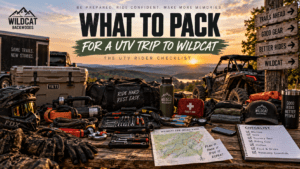
What to Pack for Wildcat Off-Road Park: UTV Checklist
What to Pack for Wildcat Off-Road Park: The UTV Rider Checklist You’re leaving for Wildcat Off-Road Park tomorrow. The machine is on the trailer. Cooler
Wildcat Off-Road Park Beginner Guide
Wildcat Off-Road Park Beginner Guide: What New Riders Should Know If you’re looking at photos and videos of Wildcat Off-Road Park and wondering “Can a